Protect the interior and close the opening temporarily before weather and materials allow a permanent repair.
An emergency visit limits new water damage; it does not replace the diagnosis and written scope that follow.
Protect People Before Property
Move occupants, furniture, and electronics away from the water path. Set a container beneath a drip only when the floor and ceiling area are safe. Keep clear of bulging drywall, wet light fixtures, fallen branches, and rooms where the ceiling is shedding material. A spreading leak is inconvenient; an electrical or structural hazard is the immediate concern.
Call (443) 347-6144 with the address, roof shape, visible opening, interior location, and current weather. Mention a flat roof, rowhome party wall, steep slope, tree involvement, or access restriction. Those details help determine whether a safe tarp or dry-in is possible now or must wait for conditions to change.
A Dry-In Is Temporary by Design
Temporary work may secure a tarp, patch a membrane opening, cover exposed sheathing, fasten loose material, or close a damaged edge. It must shed water without creating a new path under the covering. The contractor returns when the surface is safe to inspect and permanent materials can be joined to sound roofing.
Baltimore rowhome membranes and townhome party-wall details need special care because water redirected from one roof can enter a wall or neighboring section. Slate mixed with asphalt also needs a compatible temporary method. The goal is controlled drainage until a lasting roof repair can be completed.
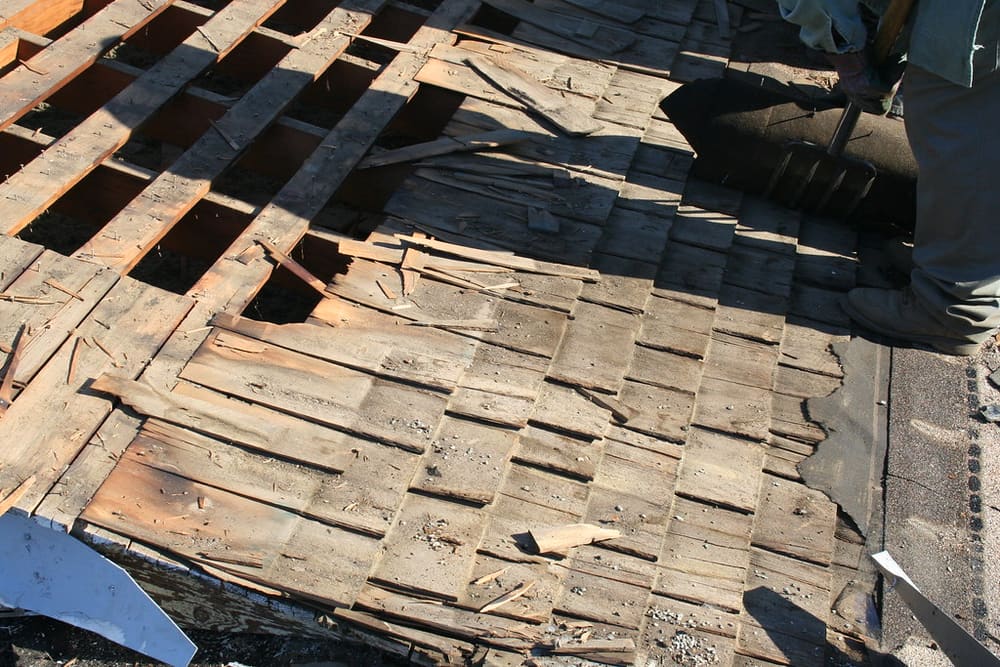
Exposed decking needs short-term weather protection before permanent roofing can be integrated.
Know Which Calls Require Emergency Routing
Active interior water, exposed decking, a branch penetration, or material hanging over a public area belongs in emergency triage. A few intact shingles found on the lawn with no leak may support a prompt standard inspection. Separating those calls lets crews prioritize openings that are still admitting water.
After a broad weather event, demand can exceed immediate capacity and travel across the state can lengthen the queue. If the building is stable and documentation is the main need, request a storm and wind inspection. Availability is confirmed for the address; no same-day outcome is assumed.
What Happens After the Rain Stops
The follow-up visit removes or lifts enough temporary material to locate the failure, check nearby decking or insulation, and document the permanent repair boundary. The written quote should address materials, flashing, membrane seams, sheathing assumptions, access, cleanup, timing, and any permit questions tied to the final scope.
A contained opening may become a standard repair. Multiple weak planes, brittle shingles, chronic membrane failure, or broad wet decking can lead to replacement planning. Use the leak tracing guide for water-path questions and the cost guide for Maryland planning ranges.
Set Expectations Before Approving Permanent Work
Ask which part of the emergency charge applies only to temporary protection and which work is included later. Typical Maryland tarp or dry-in work falls between $400-$1,000, confirmed after the contractor sees the access and opening. Permanent repair carries its own scope and price.
Request the contractor name and MHIC license number, then verify it with the Maryland Department of Labor. For insurance-related damage, keep photos and itemized invoices, but remember that the insurer controls coverage. Do not accept a deductible waiver or a promised claim result as part of the sales pitch.
If temporary protection crosses a shared rowhome or townhome edge, ask the contractor to document where water now drains and what portion of permanent work belongs to the property. That clarification can keep a short-term measure from creating a new leak path or unclear neighbor responsibility.
Emergency Roof Repair Maryland FAQs
How long should an emergency roof covering be treated as temporary?
Only until safe inspection and permanent scheduling are possible. Weather, fasteners, ultraviolet exposure, and water movement can weaken temporary materials, so arrange follow-up rather than assuming the covering finished the job.
Which details help route a Maryland roof emergency?
Give the address, roof type, interior leak location, visible opening, current weather, building height, and any branch, power-line, or access hazard. Do not inspect hazards at close range.
What can prevent a roofer from installing a tarp immediately?
High wind, lightning, slick material, steep pitch, unstable decking, tree hazards, darkness, and blocked access can make roof work unsafe. The contractor confirms what is possible at the property.
Should I puncture a ceiling bulge to release water?
Do not stand beneath bulging drywall or work near wet electrical fixtures. Move out of the room and ask an appropriate professional how to make the area safe.