Why does a roof stay dry until rain blows from one direction?
Sideways rain can cross an open flashing lap, wall transition, ridge joint, or membrane termination that sheds vertical rainfall. The direction is a useful diagnostic clue.
The ceiling tells you where water stopped traveling, not where it entered the roof.
Water can enter above a chimney, run along the sheathing, drop onto a rafter, and appear beside a light fixture. On a low-slope roof it may travel beneath a membrane before finding an insulation seam. Mark the indoor stain and note the weather that triggers it, but do not assume the opening sits directly overhead.
Call (443) 347-6144 for an active drip, a growing stain, wet attic insulation, or a leak that returned after a surface coating. Share whether it leaks during every rain, only with wind, or during a winter thaw. Those differences point the inspection toward drainage, flashing, or roof-edge backup.
Asphalt slopes commonly leak at split neoprene boots, nail pops, worn valleys, chimney flashing, step flashing, ridge caps, and roof-to-wall joints. Low-slope additions add seams, drains, curbs, and termination bars. Baltimore rowhomes add parapet caps and scuppers, where a small opening can feed water into masonry or a shared wall.
Western Maryland thaw leaks often appear close to exterior walls because water backs up at a cold eave. Bay humidity and shade can keep a damp deck from drying between rains. These conditions do not diagnose the failure by themselves, but they tell the contractor where to look and why a quick bead of sealant may miss the cause.
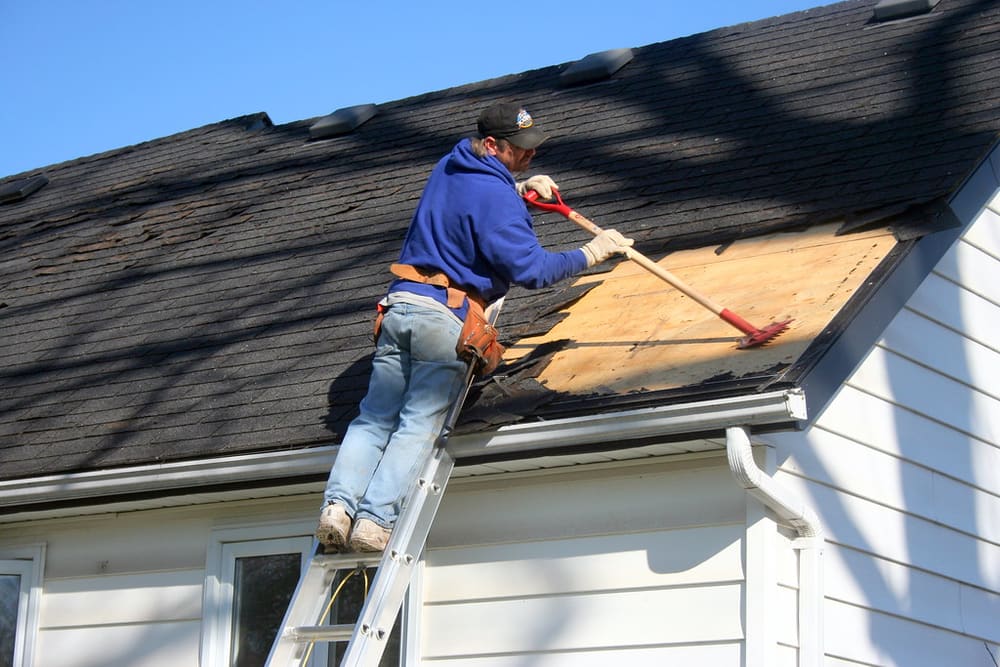
The contractor starts with the room, attic access when available, likely roof plane, and nearby penetrations or transitions. Moisture marks, rusted fasteners, compressed insulation, and staining can narrow the path. Exterior photos should then show the suspected entry, surrounding material, and any defect that needs to be opened.
A written repair scope names the detail to rebuild, materials, decking assumptions, and limits of the work. When the source is unclear because several systems meet, a broader roof inspection may be more useful than authorizing unrelated patches one by one.
A tarp or dry-in keeps more rain out while weather, access, and material availability are sorted. It is not the permanent detail. Once conditions settle, failed roofing is removed far enough to inspect the substrate and integrate the repair with sound material. Go to emergency roof repair when water is moving or the opening is exposed.
Indoors, move valuables, use a container under drips, and stay clear of wet fixtures and bulging drywall. Do not enter an unsafe attic or climb onto wet roofing for photos. Ground and interior pictures are enough to begin the scheduling conversation.
Repeated wetting can swell sheathing, flatten insulation, stain finish materials, and spread beyond the original detail. Humid, shaded roofs may dry slowly even after the drip stops. That is why a stain that grows with each rain should be inspected before a modest flashing failure becomes a larger decking and interior repair.
If several leaks have appeared on different planes, ask for a repair-versus-replacement explanation. The roof repair guide covers contained fixes, while the Maryland cost guide helps compare a short bridge with a full system scope.
Keep notes on when the stain changes. Rain direction, duration, snowmelt, gutter overflow, and whether the mark grows immediately or hours later all narrow the search. These observations do not replace roof access, but they make a repeat leak visit more productive.
Sideways rain can cross an open flashing lap, wall transition, ridge joint, or membrane termination that sheds vertical rainfall. The direction is a useful diagnostic clue.
A contained split or loose termination may be repairable when the surrounding membrane, insulation, and drainage remain serviceable. Chronic ponding, widespread seam failure, or wet insulation changes that decision.
Photograph the stain, drip location, nearby wall or fixture, and accessible attic marks only from safe flooring. Avoid wet electrical areas, sagging drywall, unsupported insulation, and the roof surface.
A broad coating can divert water, conceal fasteners and laps, and fail at its edges. Sealant works only when it is compatible and used within a correctly rebuilt detail.
Maryland Roof Pros
(443) 347-6144